 By admin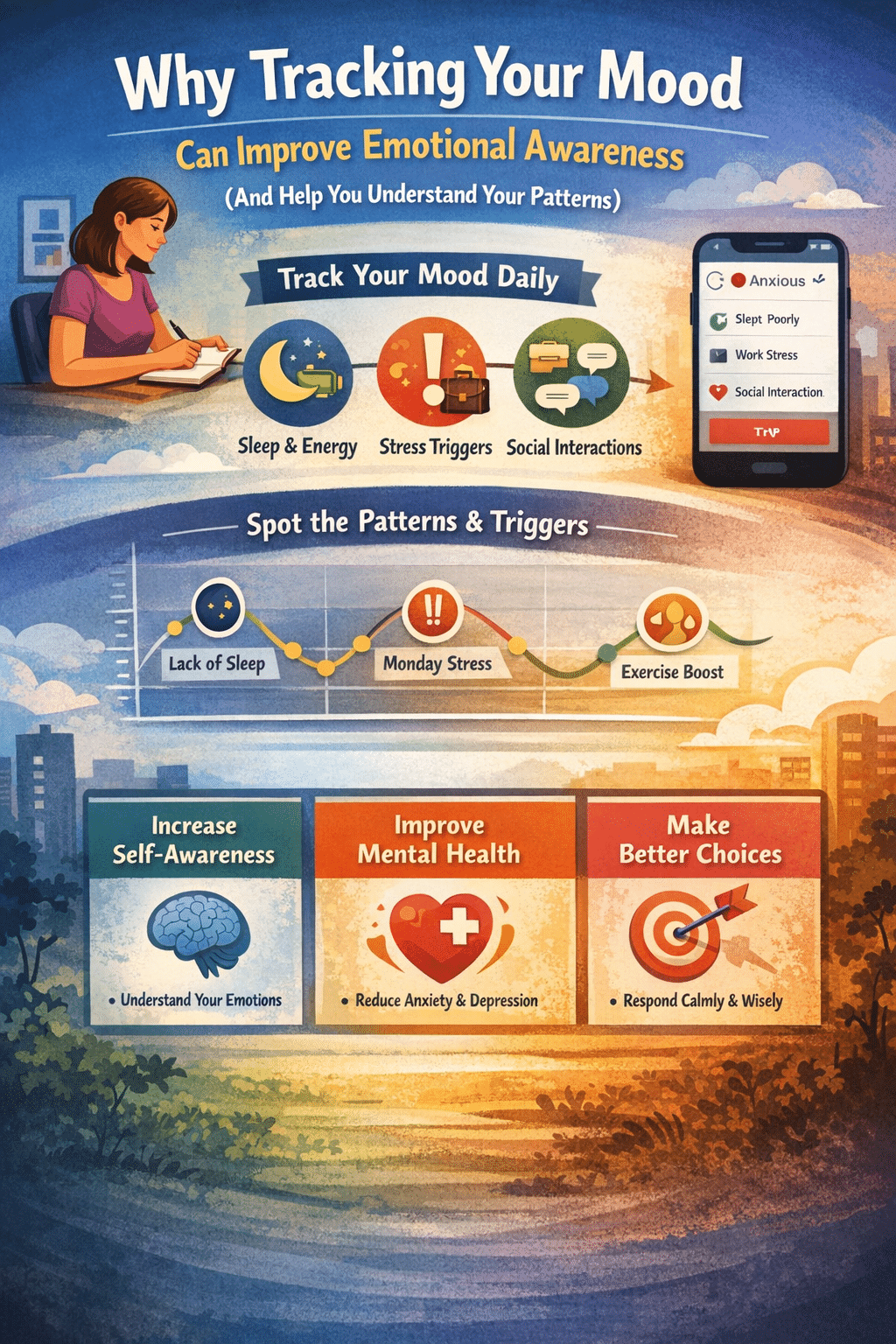
Some days feel heavy for no obvious reason. On other days, you feel energized and productive. Yet most people rarely ask why these emotional shifts happen.
This is where mood tracking becomes powerful. By recording how you feel each day, you build emotional awareness and start noticing real connections between your sleep, stress, social interactions, and habits. Over time, mood tracking strengthens emotional self-awareness and emotional regulation skills.
In this guide, we will explore the benefits of mood tracking, how it reveals deep-seated emotional patterns, and how tools like MoodLogger make the process simple.
Learn Web Development 🚀
Start your journey in programming today with interactive and hands-on courses.
Join Discord

What Is Mood Tracking?
Mood tracking is the practice of regularly recording how you feel throughout the day or week. It is a foundational tool for recognizing emotional patterns.
You can do this using:
-
a mood tracking journal
-
a mood tracking worksheet
-
or a mood tracking app
Regardless of the method, a typical daily mood tracker captures several key data points:
-
Your primary emotional state (joyful, anxious, flat, or irritable).
-
Physical factors like sleep quality and energy levels.
-
Environmental context, such as social interactions or work stress.
These small data points may seem insignificant. But over time, they build a clear picture. They support emotional pattern recognition, helping you see what actually influences your mood.
This is why mental health tracking apps (and emotional awareness apps) are growing fast. They remove friction. Instead of long journaling sessions, you log your mood in seconds.
The Science Behind Emotional Awareness
Understanding your feelings means noticing them, giving them a name, and knowing why they are there.
Instead of just saying “I feel bad,” you learn to say:
-
“I feel worried.”
-
“There is too much noise and it’s bothering me.”
-
“I feel tired because I talked to too many people.”
When you are this clear about your feelings, it changes how you handle life. This is why writing down your mood is more than just a habit—it is a powerful tool to help your mind.
What Research Actually Shows
Studies published on PubMed Central show that mood tracking improves self-awareness in a measurable way.
In one set of self-monitoring studies, over 70% of users reported that tracking helped increase their emotional awareness—from “moderately” to “a lot.”
That’s not a small effect. That’s a consistent pattern.
Why does this phenomenon happen?
Because tracking forces you to label your emotions.
And that activates something called affect labeling—the process of naming what you feel.
Research shows that when you do this:
-
the thinking segment of your brain (prefrontal cortex) becomes more active
-
the amygdala (the emotional alarm system) becomes less reactive
In simple terms:
You feel more in control.
Clinical Impact Over Time
The benefits are not just psychological. They are measurable.
According to studies indexed on ScienceDirect and the National Library of Medicine:
-
Regular mood tracking can improve treatment outcomes by 20–30%
-
Anxiety symptoms can reduce by around 29%
-
Depression symptoms can reduce by around 25% within the first few weeks of consistent tracking
There is also strong evidence in younger populations. Mood tracking has been linked to reduced impulsivity and lower negative mood in real-time assessments.
Why Tracking Your Mood Improves Self-Awareness
Let’s start with a key question: Why should you track your mood?
Mood tracking helps you do two critical things:
-
Spot patterns early
The National Library of Medicine highlights that recognizing emotional triggers and early warning signs can help prevent relapse in conditions like depression. -
Reinforce positive emotions
Research from the Journal of Experimental Social Psychology (available via ScienceDirect) shows that actively tracking positive emotions helps them last longer.
Reason 1: You Start Seeing Emotional Patterns
When you write down how you feel every day, you start to see patterns. You might notice things like:
-
You feel stressed every Monday morning.
-
You feel happier after you go for a walk or exercise.
-
You feel worried when you don’t get enough sleep.
This is how you learn what makes your feelings change. When you track your mood regularly, you don’t have to guess why you feel a certain way anymore. You can see the real reasons behind your feelings.
Reason 2: It Helps You Identify Emotional Triggers
Your emotions don’t happen randomly.
They are responses to triggers.
These could be:
-
work deadlines
-
social pressure
-
lack of sleep
-
too much screen time
Using tools like an emotional triggers worksheet, you can break this down clearly.
Once you see the trigger, you can change your response.
Reason 3: You Recognize Emotional Cycles
Your mood follows patterns over time.
These cycles may relate to:
-
weekly routines
-
work schedules
-
lifestyle habits
-
energy levels
Learning how to track mood changes to understand emotional cycles helps you predict how you might feel.
And when you can predict it, you can prepare for it.

How Mood Tracking Helps Mental Health
While anyone can benefit from self-reflection, mood tracking is a clinical gold standard for managing specific conditions.
-
Anxiety: Learning how tracking your mood helps anxiety involves identifying signals of overstimulation or burnout before they become a full panic attack.
-
Depression: When exploring how tracking your mood helps depression, users often find it reveals “low-energy patterns” or isolation behaviors that maintain the depressive loop.
-
Regulation: We use mood tracking to regulate emotions and build a “buffer” between feelings and actions. If you notice your frustration rising in your logs, you can take a break or go for a walk before a conflict occurs.
Deepening Your Understanding of Patterns
To truly benefit, you must look at how tracking your mood helps you understand your patterns across different life domains:
-
Lifestyle Patterns: Do you see a correlation between habits and mood? For many, caffeine intake is directly linked to increased mood fluctuations.
-
Work Stress Patterns: Using mood tracking can highlight “meeting fatigue” or specific times of day when your productivity and mood diverge.
-
Relationship Patterns: Mood tracking for relationships allows you to see how you respond to specific social dynamics, helping you set better boundaries.
How to Start Mood Tracking
Starting doesn’t have to be overwhelming. Follow these three steps:
Step 1: Choose Your Method
Whether you prefer a mood tracker printable, a journal to track mood, or a track emotions app, the best tool is the one you will actually use. Digital tools are often superior for pattern recognition because they can graph your data automatically.
Step 2: Track Consistently
Try to log your mood at least once a day. Consistency is the only way to analyze mood patterns from a mood tracker effectively.
Step 3: Review Your Data Weekly
Set aside ten minutes every Sunday to interpret mood tracker data to understand patterns. Ask yourself: “What was the biggest stressor this week, and how did my mood respond?”
Frequently Asked Questions
What is mood tracking and how does it work?
Mood tracking is the practice of recording how you feel over time. You log your emotions daily (or throughout the day), along with small details like what happened, your energy level, or your stress level. Over time, these entries start to form patterns.
How does tracking your mood improve emotional awareness?
Tracking forces you to pause and label what you feel. That simple act builds clarity. Over time, you begin to connect your emotions to triggers, habits, and environments.
Why is emotional awareness important?
Emotional awareness gives you a gap between feeling and action. In that gap, you can choose how to respond. It improves your decisions, your relationships, and how you handle stress. It’s not just insight—it’s control.
What can I learn from a mood journal?
A mood journal shows you patterns you would normally miss.
You may notice:
-
what triggers stress or anxiety
-
what improves your mood
-
how your energy changes across the week
It turns vague experiences into something you can actually learn from.
How often should I track my mood?
For most people, once a day is enough to start seeing patterns. If you want deeper insight, you can track multiple times a day—especially during strong emotional moments.
The key is this: keep it simple enough that you don’t stop.
What should I include in a mood tracker?
Keep it practical.
Focus on:
-
your emotion (name it clearly)
-
intensity (low, medium, high)
-
what just happened
-
your energy level
-
any obvious stressors
You’re not writing a story. You’re collecting signals.
Can mood tracking help with emotional regulation?
Yes—but not directly at first.
First, it builds awareness. Then awareness gives you options.
When you notice patterns early, you can step in sooner—before the emotion escalates. That’s how regulation actually works in real life.
What are emotional patterns?
Feeling patterns are when you have the same feeling every time the same thing happens.
For example:
-
You feel worried every time you have a big task to finish.
-
You feel sad or tired whenever you don’t sleep well.
-
You feel full of energy after you spend time with friends.
These feelings are hard to notice at first, but once you start writing them down, you can predict when they will happen.
How do I identify my emotional triggers?
To find what “triggers” or starts a feeling, look for things that happen over and over.
Look at what you wrote about your mood and ask yourself:
-
What happened just before my feeling changed?
-
Who was I with?
-
What was I doing?
These triggers don’t just happen by accident—they follow a pattern. Writing them down helps you catch them so they don’t surprise you.
Is mood tracking useful for mental health?
Yes—but only if you use it consistently.
Mood tracking helps you understand your internal patterns. That alone can reduce confusion, improve decision-making, and support better coping strategies.
It doesn’t replace support or treatment. But it makes both more effective because you show up with clearer insight.

MoodLogger: A Simple Solution
Mood tracking only works if you actually stick with it.
That’s where most tools fail. They feel like work. Too many steps. Too much thinking.
MoodLogger removes that friction.
It’s a simple web-based tool built for one thing: helping you track emotions consistently without overcomplicating the process. You log how you feel in seconds. No long forms. No pressure to write paragraphs. Just clear, quick emotional tagging.
And that matters more than it sounds.
Because the real benefit of tracking comes from repetition. When logging feels easy, you do it more often. And when you do it more often, patterns start to show up.
You begin to notice what shifts your mood. What drains you. What helps.
If you’re looking for the best mood tracking app for emotional awareness, simplicity is not a bonus—it’s the advantage.
MoodLogger helps you stay consistent. And consistency is what turns small daily entries into real self-awareness.
Join Railway
Donate via PayPal